Tropical Reef Sea Life PNG Clip Art: A Practical Guide for Designers
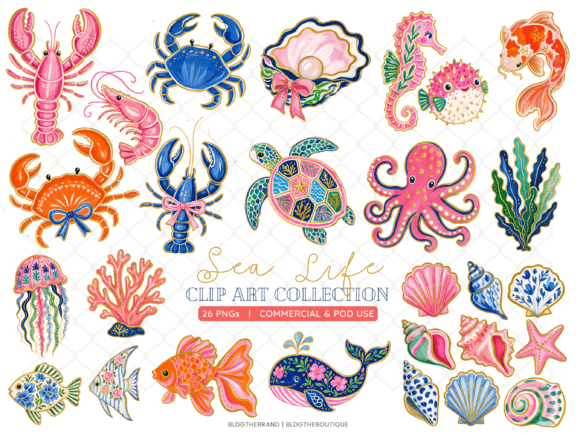
In the realm of digital design, the choice of asset format often dictates the scope and quality of a final project. For creators working on invitations, wall art, or print-on-demand (POD) products, Tropical Reef Sea Life PNG Clip Art has emerged as a versatile resource. This specific category of digital assets offers high-resolution imagery of marine environments, featuring creatures like lobsters, goldfish, crabs, shells, and coral formations. Unlike generic stock photos, these clip art packs are designed with transparency in mind, allowing for seamless integration into complex layouts without the need for manual background removal.
Understanding the technical specifications and practical applications of these files is essential for professionals and hobbyists alike. While the allure of vibrant underwater themes is universal, the decision to utilize PNG clip art over other formats involves weighing resolution, flexibility, and licensing constraints. This analysis explores the distinct characteristics of Tropical Reef Sea Life PNG Clip Art, compares it against alternative resources, and outlines the scenarios where it serves as the most effective tool.
Defining the Asset: Transparency and Resolution
The primary distinction of Tropical Reef Sea Life PNG Clip Art lies in its file structure. The Portable Network Graphics (PNG) format supports alpha channels, meaning the background pixels can be fully transparent. In a typical 26-file pack, this allows a designer to place a detailed lobster illustration directly onto a textured paper background for an invitation or overlay a cluster of coral onto a t-shirt mockup without dealing with awkward white boxes.
Resolution is another critical factor. High-quality packs often specify dimensions such as 2700 x 6000px at 300dpi. This specification is significant because it bridges the gap between web graphics and print-ready materials. Standard web images are often 72dpi, which results in pixelation when printed. The 300dpi standard ensures that when a user scales a crab or shell graphic for a large-format poster or a high-definition POD product, the edges remain crisp and the details stay sharp. This level of fidelity is what separates professional-grade clip art from low-resolution freebies found on general image repositories.
Comparing Formats: PNG vs. Vector and Raw Photography
When evaluating resources for marine-themed designs, the comparison often centers on three main categories: raster-based PNGs, vector-based SVGs, and raw photography. Each format serves a different purpose, and understanding the tradeoffs is vital for project success.
Vector Files (SVG/EPS) are frequently cited as the superior option for scalability. Because vectors use mathematical formulas rather than pixels, they can be resized infinitely without losing quality. However, creating a realistic, textured look—such as the iridescence of a goldfish scale or the porous texture of coral—is significantly more difficult in vector formats. Vectors tend to look cleaner but often lack the organic depth required for certain artistic styles. If a project requires massive scaling beyond the provided dimensions or complex shape manipulation, vectors are the better choice. Conversely, if the goal is to achieve a painterly or photorealistic aesthetic quickly, Tropical Reef Sea Life PNG Clip Art provides a finished look that would take hours to recreate in vector software.
Raw Photography offers unmatched realism but presents workflow challenges. Using a photograph of a real reef requires advanced photo editing skills to isolate subjects, color-correct lighting mismatches, and blend elements naturally. PNG clip art removes this friction. The subjects are already isolated and stylized to fit a cohesive theme. While a photograph might capture the chaotic beauty of a real ocean floor, a curated PNG pack offers a controlled, decorative aesthetic that aligns perfectly with invitation suites and merchandise designs.
Key Tradeoffs in Format Selection
- Flexibility: Vectors allow for infinite resizing and color changes; PNGs are fixed in size and color but offer immediate visual impact.
- Workflow Speed: PNGs are "drop-and-go," whereas vectors and photos often require additional editing time.
- Aesthetic Control: PNGs provide a specific, pre-styled look, while vectors and photos offer a blank canvas for total customization.
Ideal Use Cases and Limitations
The utility of Tropical Reef Sea Life PNG Clip Art is best realized in projects that prioritize speed, consistency, and print quality within a specific size range. The inclusion of unlimited commercial use in many of these packs makes them particularly attractive for Print-on-Demand (POD) entrepreneurs. A designer can take a single file of a decorative crab, place it on a mug, tote bag, or phone case template, and list it for sale immediately. The high DPI ensures that the product meets the quality standards of major printing platforms.
These assets are also exceptionally well-suited for event planning. Wedding invitations, birthday party favors, and baby shower decorations often require a cohesive visual theme. A pack containing matching shells, corals, and sea creatures ensures that every element—from the save-the-date card to the table numbers—shares the same artistic DNA. The transparent backgrounds allow these elements to float over various paper textures and colors, creating a layered, sophisticated effect.
However, there are limitations. Since these are raster images, they cannot be scaled up indefinitely. If a client requests a mural-sized print of a 2700-pixel wide image, the result will eventually degrade. Furthermore, because the style is pre-determined, users cannot easily alter the fundamental look of the artwork. You cannot change the pose of the lobster or the species of the fish without using advanced cloning tools in Photoshop. If a project demands unique, one-of-a-kind illustrations that deviate from the pack's style, commissioning custom art or using vector editors may be necessary.
Evaluating Licensing and Value
For commercial designers, the licensing terms are as important as the visual quality. Many free clip art sources come with restrictive licenses that prohibit resale or require attribution, which can complicate business models. Premium Tropical Reef Sea Life PNG Clip Art packs typically include a license for unlimited commercial use. This means the buyer can incorporate the images into products they sell without paying royalties per unit sold.
It is crucial to read the specific terms of service for any digital purchase. While "unlimited commercial use" sounds comprehensive, some licenses may restrict the number of end-users or forbid the resale of the files themselves. Additionally, buyers must remember that digital items are final sales. Once downloaded, the transaction is complete, and there is no physical item to return. This underscores the importance of reviewing the preview images and specifications before purchasing to ensure the style matches the project requirements.
Making the Decision: When to Choose PNG Clip Art
Selecting the right resource depends on the specific goals of the project. Tropical Reef Sea Life PNG Clip Art is the optimal choice when:
- Speed is a priority: You need to finalize a design quickly without spending hours isolating images or drawing from scratch.
- Consistency is key: Your project requires multiple elements (crabs, shells, coral) that share a unified artistic style.
- Print quality matters: You need 300dpi files that will look sharp on invitations, posters, or apparel.
- Budget is a factor: Purchasing a single pack of 26 images is often more cost-effective than hiring an illustrator for each individual element.
Conversely, you should consider alternatives if your project requires extreme scalability beyond the provided resolution, if you need to modify the underlying shapes of the illustrations, or if the desired aesthetic is strictly photorealistic rather than illustrative.
In conclusion, Tropical Reef Sea Life PNG Clip Art represents a balanced solution for modern designers. It combines the convenience of ready-to-use graphics with the technical quality required for professional printing. By understanding its strengths regarding transparency and resolution, as well as its limitations compared to vector formats, creators can make informed decisions that enhance their workflow and elevate the final quality of their work. Whether crafting a boutique invitation suite or launching a line of beach-themed merchandise, these assets provide a reliable foundation for bringing underwater creativity to life.