Coffee Plant One Line Art Design Guide
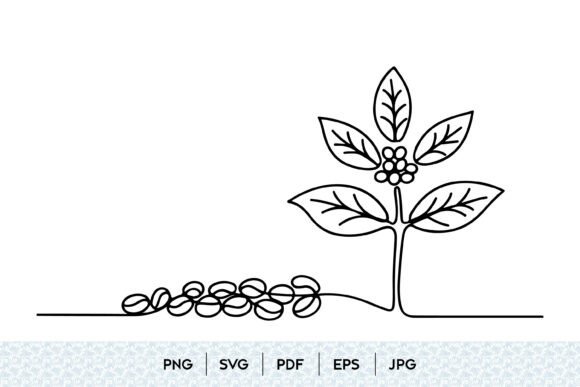
In the crowded landscape of visual branding, simplicity often commands the most attention. The Coffee Plant One Line Art Design offers a sophisticated solution for those seeking to convey elegance, nature, and craftsmanship without visual clutter. This style, characterized by a single continuous stroke that forms the entire image of a coffee branch, leaves, or berries, has become a staple in modern design aesthetics. It bridges the gap between organic botanical illustration and minimalist vector graphics, making it an invaluable asset for professionals across various industries.
Whether you are a barista opening a specialty roastery, a graphic designer building a brand identity, or a content creator looking for unique visuals, understanding the utility of this specific art form can significantly streamline your creative process. Unlike complex, multi-layered illustrations that require extensive editing, a one-line drawing provides immediate clarity and versatility. When you acquire a high-quality Coffee Plant One Line Art Design, you are not just buying an image; you are securing a flexible tool that adapts to print, digital screens, and merchandise with equal ease.
The Power of Minimalist Botanical Illustration
Minimalism is more than a trend; it is a communication strategy. In the context of coffee culture, which often emphasizes purity, origin, and the natural journey from farm to cup, a continuous line drawing resonates deeply with consumers. The Coffee Plant One Line Art Design captures the essence of the arabica or robusta plant—the delicate curve of a leaf, the cluster of red berries, and the sturdy branch—using only essential lines. This reductionist approach forces the viewer to focus on the form and the story rather than getting lost in unnecessary details.
For entrepreneurs and marketers, this clarity translates into better brand recall. A logo or icon based on a continuous line drawing is easier to remember because it creates a distinct mental image quickly. Consider a coffee shop menu: a page filled with heavy, photorealistic images can feel overwhelming. However, incorporating a subtle Coffee Plant One Line Art Design as a section divider or header adds a touch of sophistication while maintaining readability. It signals to the customer that the establishment values quality and thoughtful curation, mirroring the care taken in sourcing their beans.
This style also aligns perfectly with the "eco-design" movement. Many consumers today prefer brands that appear sustainable and connected to nature. The hand-drawn aesthetic of these line arts suggests an organic, human touch, contrasting sharply with the sterile look of many corporate logos. By using this design, businesses can visually communicate their commitment to agriculture, fair trade, and natural products without saying a word.
Technical Versatility Across Formats
One of the most practical advantages of investing in a professional Coffee Plant One Line Art Design package is the variety of file formats included. A standard delivery typically includes PNG (300 ppi), JPG, EPS, SVG, and PDF files. Each format serves a distinct purpose, ensuring the artwork performs optimally regardless of the medium.
- SVG and EPS: These vector formats are crucial for scalability. If you need to place the coffee plant illustration on a tiny espresso cup sleeve or a massive billboard, vector files ensure the lines remain crisp and sharp without pixelation. This is essential for logo design and large-format printing.
- PNG 300 ppi: High-resolution raster images are perfect for web use, social media posts, and digital presentations where transparency is required. The 300 ppi resolution ensures that even when printed on smaller items like business cards or coasters, the image retains its quality.
- JPG and PDF: These universal formats make sharing and archiving simple. They are ideal for sending proofs to clients, embedding in documents, or using in workflows where vector software is not available.
This comprehensive file set eliminates the common frustration of designers who must convert low-quality images or struggle with incompatible formats. It saves time during the production phase, allowing creators to move swiftly from concept to final output. For small business owners who may not have a dedicated design team, having all necessary formats in one zip file simplifies the decision-making process and reduces the risk of technical errors.
Strategic Applications for Professionals
The utility of a Coffee Plant One Line Art Design extends far beyond a simple logo. Its adaptability makes it suitable for a wide range of applications that enhance both functionality and aesthetics.
Brand Identity and Packaging
For coffee roasters and cafes, packaging is the primary point of contact with the consumer. A continuous line drawing of a coffee branch or berry can serve as a central motif on bags, boxes, and labels. Because the design is monochrome and clean, it pairs well with kraft paper, matte finishes, and embossing techniques. This tactile combination elevates the perceived value of the product. Furthermore, the outline drawing style allows for easy color customization if a brand wants to experiment with seasonal themes while keeping the core identity intact.
Digital Content and Social Media
In the digital realm, consistency is key. Bloggers, educators, and influencers in the lifestyle and food sectors can use these illustrations to create cohesive visual themes. A Coffee Plant One Line Art Design works beautifully as a watermark, a background element for quote graphics, or an icon for Instagram stories. The minimalist nature ensures that text remains legible over the image, a critical factor for engagement on social platforms. Additionally, the hand-drawn feel adds a personal touch that resonates with audiences tired of generic stock photography.
Merchandise and Decor
Small business owners often expand their revenue streams through merchandise. T-shirts, tote bags, mugs, and posters featuring botanical illustrations are perennial bestsellers. The continuous line art is particularly effective here because it prints cleanly on fabric and ceramics. Unlike detailed paintings that might lose definition on curved surfaces, the bold, singular lines of this design maintain their integrity. It transforms ordinary items into stylish accessories that celebrate the love of coffee and nature.
Educational Materials and Publishing
For publishers and educators creating content about agriculture, botany, or the history of coffee, these illustrations provide a clear, engaging way to visualize concepts. Textbooks, workbooks, and online courses benefit from the clarity of line art, which highlights the structure of the plant without distracting from the educational content. The ability to scale the image without loss of quality makes it ideal for both digital e-books and physical print runs.
Who Benefits Most from This Design Style?
While almost anyone involved in visual communication can utilize this resource, certain groups find particular value in the Coffee Plant One Line Art Design.
Freelancers and Creative Agencies appreciate the efficiency. Having a library of high-quality, versatile assets allows them to meet tight deadlines without compromising on style. The inclusion of editable vector files means they can tweak the design slightly to fit specific client needs, adding a custom touch without starting from scratch.
Small Business Owners and Entrepreneurs gain a competitive edge. Professional branding is often a significant expense, but utilizing pre-designed, high-quality art allows startups to achieve a polished look on a budget. The eco-friendly and organic connotations of the design align well with the values of modern coffee shops and artisanal product lines.
Hobbyists and DIY Enthusiasts can also leverage these designs for home decor, crafting, and personal projects. The printable nature of the files makes them accessible for those who want to create their own wall art or gift items without needing advanced design skills.
Considerations and Limitations
Despite its many advantages, it is important to understand where this style fits best. The Coffee Plant One Line Art Design is inherently minimalist. If a project requires hyper-realism, vibrant colors, or intricate shading to depict the texture of coffee beans or the depth of a forest, this style may not be sufficient on its own. It excels in conveying mood and concept rather than photographic detail.
Additionally, while the black-and-white monochrome palette is versatile, it relies heavily on the surrounding context for color. Designers should consider how the artwork interacts with background colors and other brand elements to ensure contrast and visibility. In some cases, combining the line art with solid color blocks or textures may be necessary to achieve the desired impact.
Finally, while the provided file formats cover most use cases, users should always verify the licensing terms associated with the download. Understanding whether the design can be used for commercial resale, such as on t-shirts for sale, versus internal marketing materials, is crucial for avoiding legal issues.
Final Thoughts on Visual Efficiency
The Coffee Plant One Line Art Design represents a convergence of artistic beauty and practical utility. It solves the problem of finding imagery that is both aesthetically pleasing and technically robust. By offering a seamless blend of botanical accuracy and modern minimalism, it empowers creators to communicate their message with clarity and confidence.
Whether you are refining a cafe logo, designing a new product label, or simply enhancing your digital content, this design approach offers a reliable foundation. It respects the viewer's attention span, honors the natural origins of coffee, and provides the technical flexibility needed in today's fast-paced creative environment. By choosing this style, you are opting for a design that is timeless, efficient, and deeply connected to the culture of coffee itself.