Seamless Traditional Circular Patterns: A Comprehensive Guide to Cultural Ornamentation
In the realm of graphic design and textile art, the Seamless Traditional Circular Patterns a collection stands out as a vital resource for professionals seeking to integrate authentic cultural aesthetics into modern projects. This specific category of design assets focuses on intricate, repeating motifs arranged in circular formations, often derived from historical ornamentation found across various global traditions. Unlike generic geometric shapes, these patterns carry a weight of heritage, offering a visual language that speaks to history, craftsmanship, and regional identity. For designers aged 20 to 50 who are navigating the complex landscape of digital assets, understanding the nuances of this collection is essential for making informed decisions about style, application, and cultural resonance.
Defining the Distinctive Nature of Circular Traditional Motifs
The core appeal of Seamless Traditional Circular Patterns a lies in its structural integrity and cultural depth. These designs are not merely random arrangements of lines and curves; they are mathematically precise repetitions that ensure a continuous flow when tiled. The "circular" aspect refers to the radial symmetry often inherent in traditional medallions, mandalas, and rosettes, which have been adapted into seamless backgrounds. This format allows for versatility, enabling the pattern to wrap around cylindrical objects like bottles or vases without visible breaks, or to serve as an expansive backdrop for web interfaces and print media.
What distinguishes this collection from standard vector libraries is the emphasis on cultural aesthetic. Each pattern typically draws inspiration from specific artistic movements, such as Islamic geometric art, Indian block printing, Celtic knotwork, or Art Nouveau flourishes. The color palettes are curated to reflect the dyes and pigments historically used in these regions, ranging from earthy terracottas and indigos to vibrant saffrons and deep crimsons. This attention to detail ensures that the final output feels grounded in tradition rather than appearing as a superficial digital overlay. When evaluating design resources, the ability of a pattern to maintain its cultural integrity while functioning seamlessly in a digital environment is a critical differentiator.
Comparing Seamless Circles with Linear and Abstract Alternatives
When selecting design elements, it is crucial to compare Seamless Traditional Circular Patterns a against other prevalent categories. The most common alternative is linear or stripe-based seamless patterns. While linear patterns excel at creating movement and directionality—often guiding the eye horizontally or vertically—circular patterns offer a sense of containment and focus. They naturally draw attention to the center, making them superior choices for framing content, highlighting product labels, or creating focal points in interior design.
Another significant comparison involves abstract versus traditional styles. Modern abstract patterns prioritize minimalism and contemporary forms, often stripping away recognizable cultural references to achieve a clean, neutral look. In contrast, the traditional circular collection embraces complexity and narrative. If a project requires a subtle, unobtrusive background, an abstract option might be preferable. However, if the goal is to evoke a sense of luxury, history, or specific regional identity, the ornate details found in Seamless Traditional Circular Patterns a provide a richness that abstract alternatives cannot match. The trade-off here is visual noise; traditional patterns can be dense, requiring careful management of scale and opacity to avoid overwhelming the primary content.
Evaluating Strengths and Tradeoffs in Practical Applications
The strengths of this collection are most evident in industries where brand storytelling relies on heritage and authenticity. In fashion, these patterns translate beautifully onto fabrics, particularly for scarves, upholstery, and ceremonial garments where the circular motif can be centered effectively. In packaging design, the radial nature of the patterns complements round containers, allowing the design to wrap perfectly around the circumference. Furthermore, in digital branding, these elements can serve as sophisticated texture overlays that add depth without compromising readability, provided the contrast is managed correctly.
However, there are inherent limitations and tradeoffs to consider. The complexity of traditional ornaments means that file sizes can be larger than simpler geometric vectors, potentially impacting load times on mobile devices if not optimized. Additionally, the cultural specificity of these designs requires sensitivity. Using a pattern associated with a specific religious or cultural ceremony in a context that trivializes its meaning can lead to negative public reception. Designers must evaluate whether the pattern's origin aligns with the brand's values and the intended message. Unlike generic stock imagery, Seamless Traditional Circular Patterns a demands a higher level of contextual awareness from the user.
Scalability is another factor. While seamless patterns are designed to repeat, highly detailed traditional motifs may lose clarity when scaled down for small applications, such as icons or fine print text backgrounds. In these scenarios, a simplified version of the pattern or a different style altogether might be more effective. It is also worth noting that the color variations, while extensive, may require adjustment to fit specific brand guidelines. A pattern rendered in traditional ochre and teal may need to be recolored to match a corporate palette, a process that can sometimes alter the perceived balance of the original design.
Decision Factors: When to Choose Traditional Circular Designs
Determining when Seamless Traditional Circular Patterns a is the right choice involves analyzing the project's emotional goals and functional requirements. This collection is the optimal solution when the objective is to communicate stability, eternity, or completeness, concepts often symbolized by the circle in various cultures. It is also the preferred option for projects targeting audiences who value craftsmanship and artisanal quality. If a client is launching a line of organic skincare products inspired by ancient remedies, or a boutique hotel aiming to highlight local architecture, these patterns provide an immediate visual connection to those themes.
Conversely, there are situations where other options should be prioritized. For tech startups aiming for a futuristic, sleek image, or for minimalist brands focusing on stark typography, the density of traditional circular patterns may feel out of place. Similarly, if the design needs to convey speed, urgency, or linear progression, the static, cyclical nature of these motifs might work against the desired effect. In cases where budget constraints limit the time available for customization, a simpler, pre-colored asset might be more efficient than a complex traditional pattern that requires significant editing to integrate seamlessly.
Navigating Color Variations and Decorative Ornaments
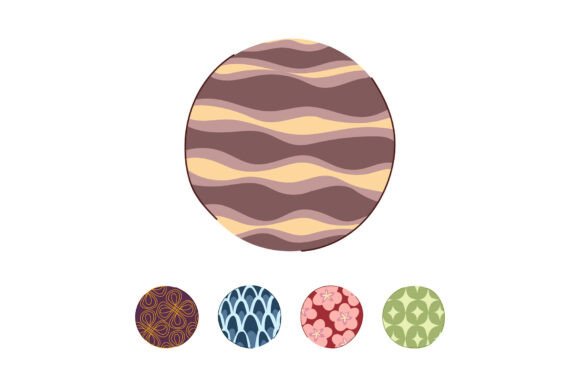
A defining feature of the Seamless Traditional Circular Patterns a collection is its diverse range of colored decorative ornaments. These are not limited to monochromatic outlines but include fully rendered textures that simulate hand-painted or woven effects. The availability of various color schemes allows designers to adapt the same structural motif to different moods. For instance, a dark, moody palette using deep purples and golds can convey luxury and mystery, suitable for evening wear or high-end event invitations. Alternatively, bright, pastel interpretations of the same circular structure can create a playful, youthful vibe appropriate for children's books or summer collections.
The integration of decorative ornaments within the seamless loop adds layers of visual interest. These ornaments often act as the "nodes" of the pattern, connecting the repeating segments. Evaluating the quality of these connections is vital; a poorly executed seamless join can break the illusion of continuity, ruining the professional finish of the design. High-quality resources in this category ensure that the ornaments align perfectly regardless of how many times the pattern repeats. This technical precision is what separates professional-grade assets from amateur attempts.
Strategic Implementation for Maximum Impact
To leverage the full potential of these patterns, designers should consider layering techniques. Placing a low-opacity version of a Seamless Traditional Circular Pattern behind bold typography can create a sophisticated hierarchy that guides the reader's eye without causing distraction. In print media, varying the paper texture alongside the digital pattern can enhance the tactile experience, mimicking the feel of traditional textiles or hand-printed posters. When comparing tools, vector-based formats generally offer the best flexibility for these adjustments, allowing for non-destructive color changes and scaling.
Ultimately, the decision to use Seamless Traditional Circular Patterns a should be driven by a clear understanding of the project's narrative. These patterns are powerful tools for evoking emotion and establishing a cultural context, but they require thoughtful application. By weighing the benefits of their rich heritage and structural versatility against the challenges of complexity and cultural sensitivity, designers can make informed choices that elevate their work. Whether exploring alternatives or refining a specific aesthetic, this collection offers a robust foundation for creating designs that are both visually striking and culturally resonant.