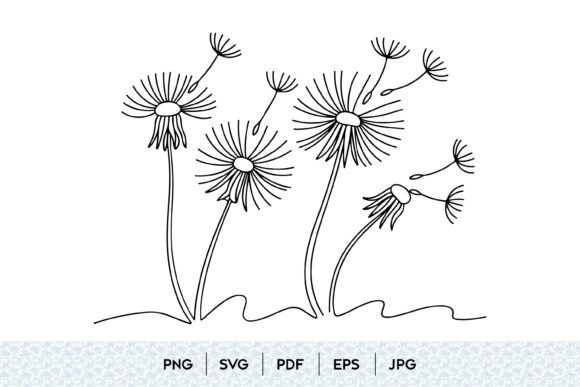
Dandelion Flower Line Art: Versatile Design
There is a quiet elegance in the simplicity of a dandelion. Often dismissed as a stubborn weed in manicured lawns, this wildflower transforms into a symbol of resilience and delicate beauty when rendered through clean, continuous strokes. Dandelion Flower Line Art captures this essence, stripping away color and texture to focus on the fundamental structure of the plant. From the tight, spherical cluster of seeds to the graceful arch of the stem, these illustrations rely on precision and flow to convey character. For anyone working with visual design, whether for personal projects or commercial ventures, understanding the power of this minimalist aesthetic can unlock new creative possibilities.
The Essence of Minimalist Botanical Illustration
At its core, line art is about reduction. It challenges the artist or designer to communicate form, depth, and emotion using only the boundaries of an object. When applied to a dandelion, the result is often a striking contrast between the chaotic nature of the seed head and the controlled discipline of the drawing. This style fits perfectly within the broader trends of modern botanical art, where organic shapes meet geometric clarity.
The versatility of Dandelion Flower Line Art lies in its adaptability. A single high-quality illustration can serve as a standalone piece of wall decor, a subtle watermark on a brand's packaging, or a complex element in a larger composition. Because the style relies on black lines against a white background (or any solid color), it integrates seamlessly into various design systems without clashing with existing color palettes. Whether you are looking for a one-line flower sketch that loops continuously or a more detailed contour drawing that highlights individual petals, the medium offers a range of expressions suitable for different moods and applications.
Why Different Audiences Value This Style
The appeal of floral line drawings extends far beyond just aesthetics; it addresses specific functional needs across various professions and hobbies. What matters most to a graphic designer might differ significantly from what a teacher or a small business owner prioritizes, yet the underlying asset remains the same.
For Beginners and Hobbyists: The primary draw is accessibility. Learning to appreciate or create line art does not require expensive materials or advanced technical skills. For those just starting their artistic journey, tracing or studying dandelion sketches provides a gentle introduction to understanding organic forms. The simplicity allows beginners to focus on line weight and flow without getting overwhelmed by shading or color theory. Additionally, printable versions of these artworks offer an instant way to decorate a home or craft space, providing immediate gratification and a sense of accomplishment.
For Educators and Therapists: In educational settings, the dandelion serves as an excellent subject for teaching observation skills. Its distinct stages of growth—from bud to flower to seed puff—make it a perfect case study for biology lessons. Line art prints can be used as coloring pages for children, fostering fine motor skills and creativity. In therapeutic contexts, the act of coloring intricate botanical outlines has been shown to reduce stress and promote mindfulness. The repetitive, rhythmic nature of the lines in a blowing dandelion sketch can be particularly soothing.
For Professionals and Creators: Graphic designers, illustrators, and marketers value the scalability and flexibility of vector-based line art. A high-resolution SVG or EPS file ensures that the image remains crisp at any size, from a tiny favicon on a website to a massive billboard. Professionals often look for assets that can be easily modified. Being able to adjust line thickness, separate elements like the seeds from the stem, or combine multiple flowers into a seamless pattern is crucial for maintaining brand consistency and meeting tight deadlines. The "modern floral design" trend heavily favors this clean look, making it a staple in contemporary branding.
Evaluating Quality and Utility for Your Projects
When considering whether Dandelion Flower Line Art is the right choice for your next project, several factors come into play. It is not just about finding an image that looks nice; it is about ensuring the file meets your technical and creative requirements.
- File Format Flexibility: One of the most critical aspects is the availability of multiple formats. Having access to SVG, PNG, EPS, JPG, and PDF files means you are covered for almost any scenario. SVGs are ideal for web use and scaling, while high-resolution JPGs or PNGs work well for social media posts and printables. EPS files are the gold standard for professional printing, allowing for lossless editing in software like Adobe Illustrator.
- Commercial Viability: For entrepreneurs and small business owners, the ability to use an image commercially without legal hurdles is paramount. Many creators seek out editable floral vectors that they can incorporate into product designs, such as t-shirts, tote bags, or greeting cards. The clean, timeless nature of line art ensures that products featuring these designs do not quickly go out of style, offering long-term value.
- Aesthetic Consistency: If you are building a brand identity, consistency is key. Line art offers a uniform look that can be applied across various touchpoints. Whether it is a logo mark, a section divider on a website, or an icon on a mobile app, the elegant flower drawing maintains a cohesive visual language. This is particularly important for businesses aiming for a "boho botanical" or "minimalist" vibe.
- Creative Adaptability: Even experienced artists may find themselves needing a quick base to build upon. A simple botanical outline can be colored digitally, combined with watercolor textures, or used as a stencil for physical crafts. The potential for remixing and reinterpreting the original sketch adds significant value to the asset.
Practical Applications Across Industries
To truly understand the utility of these illustrations, it helps to visualize them in action. Imagine a wedding planner selecting invitations. Instead of traditional, heavy floral arrangements, they opt for a delicate wildflower sketch of a dandelion to symbolize wishes and new beginnings. The minimalist approach keeps the invitation elegant and readable while adding a touch of rustic charm.
Consider a digital marketer creating content for a wellness blog. They need images that convey calmness and nature without distracting from the text. A fine line drawing of a blowing dandelion acts as a perfect header image, reinforcing the theme of letting go and moving forward. The lack of color ensures the typography pops, improving readability and user engagement.
For a freelance illustrator working on a children's book, the challenge is to create engaging visuals that aren't too busy. A hand-drawn botanical style allows for expressive characters and settings. The dandelion becomes a magical element in the story, perhaps carrying a message or serving as a vehicle for a tiny protagonist. The simplicity of the line art invites the young reader's imagination to fill in the details.
Finding the Right Fit for Your Goals
Deciding if Dandelion Flower Line Art aligns with your needs requires a moment of reflection on your project's scope and audience. If you are aiming for a bold, vibrant statement, a full-color photograph might be more appropriate. However, if your goal is sophistication, versatility, and timelessness, line art is likely the superior choice.
Beginners should look for resources that offer clear, printable guides or easy-to-use digital files to start their journey. Professionals should prioritize vector files that allow for granular control over every curve and stroke. Business owners must ensure the licensing terms match their commercial ambitions, seeking out assets that grant broad usage rights.
Ultimately, the beauty of the dandelion lies in its paradox: it is both common and extraordinary. By translating this wildflower into a refined line drawing, we capture a universal symbol of hope and change. Whether you are designing a logo, teaching a class, or simply decorating your home, these illustrations offer a bridge between the natural world and our creative expressions. With the right tools and formats available, integrating this elegant nature art into your workflow becomes not just possible, but inspiring.