Spider Web Collection for Spooky Season: Elevating Horror and Mystery Design
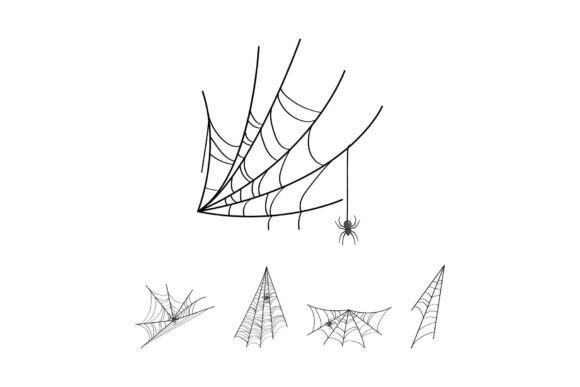
The atmosphere of autumn is often defined by the subtle details that signal a shift in the calendar. For designers, marketers, and creative professionals, this seasonal transition requires more than just a change in color palette; it demands a specific visual language that resonates with cultural expectations of mystery and suspense. The Spider Web Collection for Spooky Season represents a critical asset in this visual vocabulary. This curated set of illustrations, featuring intricate webs and small arachnids isolated on a white background, serves as a versatile foundation for horror, mystery, and decorative concepts across digital and print media.
In an era where content saturation is high, the quality of imagery determines whether a message lands or gets lost. A well-executed spider web illustration does not merely depict an insect's home; it evokes a feeling of entrapment, age, and the unknown. When these elements are provided as clean, isolated graphics, they empower creators to integrate them seamlessly into complex layouts without fighting against distracting backgrounds. This utility transforms a simple graphic element into a strategic tool for storytelling and brand identity during the most commercially significant quarter of the year.
The Evolution of Seasonal Visual Assets
Historically, spooky season imagery relied heavily on stock photography or generic clip art that often lacked cohesion. Photographs of real spider webs, while realistic, frequently came with muddy backgrounds, inconsistent lighting, and limited scalability. Generic clip art, conversely, often suffered from a cartoonish aesthetic that undermined the intended mood of genuine horror or sophisticated mystery. The market has shifted significantly toward vector-based and high-resolution raster illustrations that offer precision and flexibility.
This evolution reflects broader changes in modern workflows. Today's design teams operate under tight deadlines, requiring assets that can be adapted instantly for social media stories, email headers, website banners, and physical packaging. The Spider Web Collection for Spooky Season addresses this need by providing a consistent style guide within a single download. Whether the project requires a gothic, Victorian-era aesthetic or a modern, minimalist approach to horror, having a unified collection ensures brand consistency. The inclusion of small arachnids adds a layer of narrative detail, suggesting life and movement within the static image, which is essential for engaging audiences who scroll quickly through feeds.
Furthermore, the trend toward "isolated on a white background" assets is driven by the technical demands of current publishing platforms. Transparency and clean edges allow for non-destructive editing, meaning a designer can place a web over a dark gradient, a textured paper background, or a vibrant photograph without needing to spend hours masking out unwanted pixels. This efficiency is not just a convenience; it is a business imperative for agencies and freelancers managing multiple clients simultaneously.
Why Isolation Matters in Modern Design
The decision to isolate illustrations on a white background is a deliberate choice that enhances versatility. In professional design, the ability to composite images is paramount. When a spider web illustration is cleanly cut, it becomes a modular component. A marketing team can use the same web graphic to frame a product shot for a Halloween sale, overlay it on a book cover for a thriller novel, or scatter it across a landing page to create depth.
This modularity supports the growing demand for dynamic content. Social media algorithms favor visually distinct posts that capture attention within seconds. An isolated web allows for animation possibilities that static photographs cannot match. Creators can animate the threads, make the arachnid move slightly, or have the web appear to spin into existence. These micro-interactions increase user engagement and dwell time, key metrics for any digital strategy. By starting with a high-quality, isolated base, the potential for motion graphics expands significantly without compromising the integrity of the original artwork.
Strategic Applications Across Industries
The utility of a comprehensive spider web collection extends far beyond simple decoration. It serves as a functional element in various sectors, from publishing to retail and entertainment. Understanding how to leverage these assets effectively can differentiate a campaign from its competitors.
- Publishing and Book Design: For authors and publishers in the horror and mystery genres, cover art is the primary sales driver. A detailed spider web illustration can serve as a central motif, drawing the eye to the title or suggesting the setting of the story. The presence of small arachnids adds texture and hints at the scale of the narrative world.
- Retail and E-commerce: During October, online stores must transform their digital storefronts to reflect the season. Using isolated web graphics allows retailers to frame products without obscuring them. A web draped over a corner of a banner creates a sense of discovery, inviting the customer to click through to explore "hidden" deals or exclusive collections.
- Event Planning and Hospitality: Venues hosting haunted attractions, themed parties, or seasonal dining experiences rely on immersive environments. High-resolution prints of these illustrations can be used for signage, table centerpieces, and projection mapping. The clarity of the lines ensures that even when printed large format, the details remain sharp and impactful.
- Digital Marketing and Branding: Brands that wish to maintain a connection with their audience during the holidays without alienating their core identity can use these subtle elements. A small arachnid in the corner of a logo or a faint web pattern in a background texture signals the season without overwhelming the brand message.
Navigating the Psychology of Fear and Curiosity
Effective use of spider web imagery taps into deep-seated psychological responses. Arachnophobia is common, but so is a fascination with the intricate geometry of webs. This duality makes the Spider Web Collection for Spooky Season a powerful tool for emotional engagement. The web represents a trap, a boundary, and a connection between the visible and invisible worlds. When paired with small arachnids, the imagery triggers a primal alertness that captures attention immediately.
However, the execution must be calibrated to the target audience. For a family-friendly event, the arachnids should be stylized and less menacing, perhaps hidden within the complexity of the web to create a "find the bug" game. For a true horror experience, the details should be sharper, darker, and more prominent, emphasizing the predatory nature of the creature. The versatility of the collection allows creators to adjust the tone simply by changing the context in which the illustration is placed, rather than needing entirely new assets.
Practical Implementation for Creators and Professionals
Integrating these illustrations into a workflow requires a strategic approach to ensure maximum impact. Professionals should consider the hierarchy of their designs. A large, dominant web can anchor a composition, while smaller, scattered webs can add texture and depth to negative space. The isolation of the elements means they can be layered with varying opacity to create atmospheric effects, such as dust motes caught in a thread or the fading memory of an abandoned structure.
For digital creators, optimizing file formats is crucial. While the source files may be high-resolution TIFFs or PSDs, delivering optimized PNGs with transparent backgrounds ensures fast loading times on websites and mobile apps. This balance between visual fidelity and performance is essential for maintaining a seamless user experience. Additionally, understanding color theory is vital. While the illustrations come isolated on white, applying gradients or duotone effects can adapt them to any brand color scheme, ensuring they fit perfectly within existing visual identities.
Business owners and entrepreneurs should view these assets as part of a broader content strategy. Rather than creating one-off images, building a library of related elements—such as the Collection of various spider web illustrations with small arachnids—allows for a cohesive campaign across all touchpoints. Consistency builds recognition. When a customer sees the same stylistic web on a social media post, an email newsletter, and a physical flyer, it reinforces the brand's presence and the thematic unity of the season.
Future-Proofing Creative Workflows
As technology advances, the demand for adaptable, high-quality assets will only increase. The rise of augmented reality (AR) filters and interactive web experiences means that 2D illustrations are increasingly being used as textures or masks for 3D environments. A clean, isolated spider web is easily converted into a depth map or a displacement texture, allowing it to exist in virtual spaces. By investing in collections that prioritize technical cleanliness and artistic detail now, creators are preparing for future applications that may require these assets in unexpected ways.
Moreover, the shift towards sustainable design practices favors digital-first assets. Reducing the need for custom photography shoots lowers the carbon footprint associated with travel and equipment usage. Utilizing a robust Spider Web Collection for Spooky Season allows businesses to achieve high-impact visuals with minimal resource expenditure, aligning creative goals with environmental responsibility.
Ultimately, the value of these illustrations lies in their ability to tell a story before a single word is read. They set the stage, establish the mood, and invite the viewer into a world of mystery and intrigue. Whether for a seasoned graphic designer or a small business owner looking to spice up their holiday marketing, these tools provide the necessary foundation to create memorable, effective, and professionally polished content. In the competitive landscape of seasonal marketing, the difference between good and great often comes down to the quality and versatility of the visual elements chosen.