Elevating Brand Aesthetics with Maple Leaf One Line Art
In the rapidly evolving landscape of digital and print design, the pendulum has swung decisively away from cluttered, hyper-realistic imagery toward clean, purposeful minimalism. At the forefront of this shift is a specific aesthetic that combines botanical elegance with structural simplicity: Maple Leaf One Line Art. This style represents more than just a decorative choice; it is a strategic asset for professionals, creators, and entrepreneurs looking to communicate sophistication, nature, and clarity in a single visual breath.
Whether you are a graphic designer curating a portfolio, a marketer launching an autumn campaign, or an entrepreneur branding a sustainable lifestyle product, understanding the power of continuous line illustrations can transform your visual identity. By leveraging high-quality assets available in SVG, PNG, EPS, JPG, PDF, and other formats, you gain the flexibility to deploy these designs across every medium imaginable, from massive billboards to intricate mobile interfaces.
The Essence of Continuous Line Botanical Design
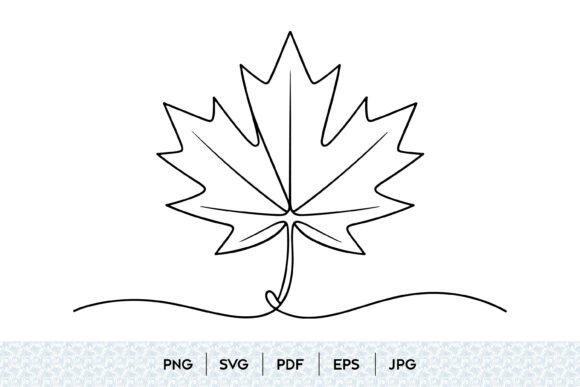
Maple Leaf One Line Art is defined by its constraint: the entire image of a leaf is rendered without lifting the pen or stylus from the surface. This technique, often referred to as a continuous line illustration or contour drawing, forces the artist to focus on the essential flow and rhythm of the subject rather than minute details. The result is a minimalist botanical design that captures the spirit of the maple leaf—its iconic lobes, serrated edges, and organic symmetry—using nothing but a single, unbroken stroke.
This approach strips away the non-essential, leaving behind a elegant nature art piece that resonates deeply with modern audiences. In an era where consumers are bombarded with thousands of visual stimuli daily, the brain craves simplicity. A maple leaf sketch executed in one line offers immediate recognition while providing a moment of visual calm. It is the difference between shouting and whispering; the latter often commands more attention in a crowded room.
Why the Market is Embracing Organic Line Artwork
The surge in popularity for botanical outline art is not accidental. It aligns perfectly with broader cultural and technological trends. As we move further into the digital age, there is a counter-movement seeking authenticity and connection to the natural world. This "biophilic design" trend suggests that incorporating elements of nature into our environments improves well-being and cognitive function. Maple foliage line art serves as a perfect vehicle for this sentiment.
Furthermore, the rise of mobile-first consumption has necessitated a change in how we create graphics. Complex, heavy images slow down load times and lose fidelity on small screens. A simple leaf illustration, particularly when created as a vector, scales infinitely without losing quality. This makes it ideal for responsive web design, app icons, and social media avatars. The versatility of these files ensures that whether you need a printable leaf art for a workshop handout or a modern botanical illustration for a website header, the asset performs flawlessly.
Strategic Applications for Professionals and Entrepreneurs
For business owners and creative directors, the decision to use Maple Leaf One Line Art is often driven by brand positioning. This style communicates values such as sustainability, growth, clarity, and organic development. It is particularly effective for industries ranging from wellness and eco-friendly products to financial services and tech startups that wish to appear grounded and human-centric.
- Brand Identity: A black line botanical logo featuring a maple leaf can serve as a timeless mark. Unlike trendy gradients or 3D effects, a clean outline drawing remains relevant for decades. It signals stability and enduring quality.
- Seasonal Marketing: Autumn campaigns often suffer from clichéd, overused imagery. Replacing stock photos of falling leaves with a fall season artwork in a minimalist style allows brands to stand out. It feels curated and intentional rather than generic.
- Packaging Design: In the consumer goods sector, packaging is the primary point of sale. A leaf decor illustration printed on a bottle or box adds a touch of luxury and craftsmanship. The clean outline drawing style works exceptionally well with embossing and foil stamping techniques.
- Digital Content: For content creators and bloggers, using artistic nature graphic elements breaks up text-heavy layouts. These visuals act as breathing rooms, guiding the reader's eye through the narrative without distracting from the core message.
The Technical Advantage of Multi-Format Assets
One of the most significant practical benefits of sourcing professional Maple Leaf One Line Art is the availability of diverse file formats. A robust collection will provide SVG, PNG, EPS, JPG, PDF, ensuring that the asset is ready for any workflow. Understanding the utility of each format is crucial for maximizing efficiency.
- SVG (Scalable Vector Graphics): This is the gold standard for web and screen use. Because SVG is code-based rather than pixel-based, a maple leaf vector remains crisp at any zoom level. It is also editable, allowing designers to tweak colors or line weights to match their brand guidelines instantly.
- EPS (Encapsulated PostScript): Essential for professional print production. If you are sending a design to a commercial printer for large-format banners or high-end brochures, the editable botanical vector in EPS format ensures that the output is sharp and color-accurate.
- PNG (Portable Network Graphics): Ideal for situations requiring transparency. When placing a black and white leaf art over a colored background in a presentation or social media post, the transparent background of a PNG ensures a seamless integration.
- JPG (Joint Photographic Experts Group): While less flexible than vectors, JPGs are universally compatible. They are perfect for quick email attachments, blog posts where bandwidth is a concern, or preview images.
- PDF (Portable Document Format): A versatile container that preserves layout and typography. A botanical printable artwork delivered as a PDF is ready for home printing or distribution as a downloadable resource.
Having access to all these formats eliminates the friction of conversion. Instead of spending hours trying to rasterize a vector or trace a low-resolution image, the creator can simply select the right tool for the job. This efficiency is vital in fast-paced marketing environments where time-to-market can determine success.
Integrating Minimalism into Your Workflow
Adopting Maple Leaf One Line Art requires a shift in mindset regarding composition. Because the lines are so sparse, the surrounding whitespace becomes an active design element. Professionals must learn to balance the negative space around the contour leaf drawing to ensure it doesn't feel lost on the page.
Consider the context of a modern leaf sketch in a corporate annual report. Placed next to a dense block of text, the simple line art provides a visual anchor that draws the reader in. It suggests that the company values precision and clarity. Conversely, in a fall botanical design for a coffee shop menu, the same style might evoke a sense of warmth and artisanal care. The adaptability of the organic line artwork lies in its neutrality; it does not impose a heavy mood but rather enhances the existing atmosphere.
Moreover, the trend toward hand drawn leaf design aesthetics speaks to a desire for human touch in an automated world. Even when these illustrations are created digitally, they mimic the imperfections and fluidity of a physical pen stroke. This subtle irregularity makes the aesthetic leaf illustration feel more authentic and approachable than a perfectly symmetrical geometric shape.
Future-Proofing Your Visual Strategy
As we look toward the future of design, the principles embodied by Maple Leaf One Line Art are likely to become even more prevalent. With the increasing adoption of augmented reality (AR) and virtual interfaces, lightweight, scalable graphics will be essential. Heavy, texture-rich images may struggle in immersive environments, whereas clean line drawings render efficiently and maintain legibility across various devices.
Furthermore, the global emphasis on sustainability extends beyond materials to digital carbon footprints. Smaller file sizes, which are inherent to vector-based simple autumn design assets, consume less energy to store and transmit. By choosing efficient, elegant graphics, businesses inadvertently contribute to a greener digital ecosystem.
For freelancers and agencies, mastering this style opens new avenues for client work. From creating decorative botanical art for interior design catalogs to developing seasonal botanical artwork for e-commerce stores, the demand for versatile, high-quality line art is growing. Clients are increasingly aware that a cohesive visual language—one built on nature inspired artwork and consistent styling—builds trust and brand equity.
Conclusion: The Power of Simplicity
Maple Leaf One Line Art is far more than a fleeting trend; it is a fundamental expression of modern design philosophy. It marries the beauty of the natural world with the functional requirements of contemporary media. Whether utilized as a leaf svg graphic for a tech startup or a printable leaf art for a home decor enthusiast, this style delivers impact through restraint.
By embracing the versatility of formats like SVG, PNG, EPS, JPG, PDF, and focusing on the intrinsic qualities of continuous line illustration, professionals can create work that is both timeless and timely. In a world full of noise, the quiet confidence of a single, flowing line speaking to the essence of a maple leaf offers a powerful way to connect, communicate, and inspire.
As you refine your creative toolkit, consider how minimalist plant art can elevate your projects. The intersection of technology, nature, and design is fertile ground for innovation, and Maple Leaf One Line Art stands as a testament to the enduring power of simplicity.