Celebrating Unity and Joy: The Significance of Eid Al-Fitr for Muslim Families
Across the globe, millions of people prepare with anticipation for one of the most joyous occasions in the Islamic calendar: Eid Al-Fitr. Known as the "Festival of Breaking the Fast," this celebration marks the conclusion of Ramadan, the holy month of fasting, prayer, and spiritual reflection. For Muslim families, Eid is not merely a holiday; it is a profound expression of gratitude, community, and renewal. Whether depicted in a warm, modern flat vector illustration or experienced in the bustling streets of a city, the essence of Eid remains a testament to peace and togetherness.
In an increasingly digital world, the visual representation of these traditions has become just as important as the rituals themselves. From greeting cards to social media campaigns, the imagery of a Muslim family celebrating Eid—complete with prayer gestures, crescent moon ornaments, and glowing lanterns—serves as a universal symbol of hope. This article explores the deep roots of Eid Al-Fitr, its practical relevance in modern life, and how its spirit influences creativity, business, and education today.
The Spiritual Foundation of Eid Al-Fitr
To truly understand the celebration, one must first grasp its purpose. Eid Al-Fitr occurs on the first day of Shawwal, the tenth month of the Islamic lunar calendar. It follows 29 or 30 days of fasting during Ramadan, where Muslims abstain from food, drink, and other physical needs from dawn until sunset. The fast is designed to cultivate self-discipline, empathy for the less fortunate, and a deeper connection with God.
When the new moon is sighted, signaling the end of Ramadan, the atmosphere shifts from solemn introspection to exuberant joy. The word "Eid" itself means "festival" or "recurrence." Therefore, Eid Al-Fitr is a recurring festival of gratitude. It is a time when believers thank Allah for granting them the strength to complete the fast. The day begins with a special congregational prayer, known as Eid Prayer, followed by the payment of Zakat al-Fitr, a mandatory charity given to ensure that everyone in the community can celebrate.
Key Elements of the Celebration
While practices may vary slightly across different cultures, several core elements remain consistent:
- Prayer and Gratitude: The day starts early with prayers in mosques or open fields, emphasizing unity and humility.
- Charity (Zakat): Before the prayer, Muslims give charity to the poor, ensuring no one goes hungry on this festive day.
- Gathering with Family: After prayers, families gather for a large meal, breaking their fast together after a month of restraint.
- Exchange of Gifts: Children often receive gifts or money (known as Eidi), fostering generosity and happiness.
- Traditional Attire: People wear their finest clothes, often new, to honor the sanctity of the occasion.
Visualizing Tradition: The Art of Eid Illustrations
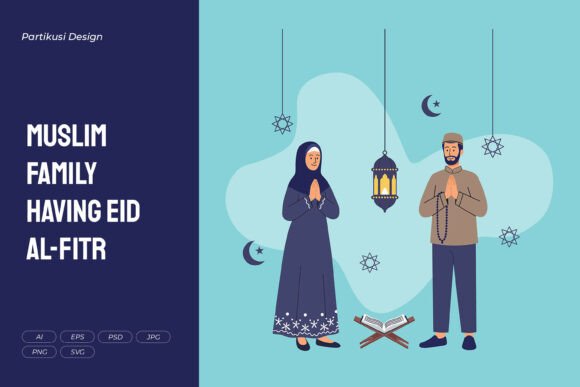
In the realm of design and digital communication, capturing the spirit of Eid requires more than just text; it demands evocative imagery. A beautiful flat vector illustration featuring a Muslim family celebrating Eid Al-Fitr has become a staple in modern graphic design. These artworks are not merely decorative; they serve as cultural bridges, conveying complex emotions through simple, elegant lines.
Consider the typical composition of such an illustration: a family standing together with hands raised in prayer gestures, surrounded by intricate Islamic lantern decorations and crescent moon ornaments. Often, elements of the Quran are subtly integrated into the background, grounding the festive scene in spiritual reverence. The use of soft, modern color tones—such as golds, teals, and warm creams—reflects the peaceful atmosphere of Ramadan while adding a contemporary flair suitable for digital platforms.
Why Vector Art Matters for Eid
The technical aspects of these illustrations are as significant as their aesthetic appeal. High-quality vector files, available in formats like AI, EPS, PSD, SVG, PNG, and JPG, offer unparalleled versatility. Because they are fully layered and scalable, designers can resize these images for a tiny social media icon or a massive event banner without losing clarity. This scalability is crucial for businesses and organizations planning Eid campaigns.
Furthermore, the editable nature of these files allows for customization. A designer might change the clothing colors to match a brand's palette or adjust the background to fit a specific educational theme. This flexibility ensures that the message of Eid remains relevant and accessible across diverse contexts, from religious event banners to corporate diversity initiatives.
Eid Al-Fitr in Modern Life and Business
As the world becomes more interconnected, the observance of Eid Al-Fitr has transcended religious boundaries to influence broader societal sectors, including business, technology, and education. Understanding the nuances of this holiday is essential for creating inclusive environments and effective marketing strategies.
Business and Marketing Opportunities
For businesses, Eid represents a significant economic opportunity. It is a period of high consumer spending, similar to Christmas in Western cultures. Companies often launch Eid Al-Fitr campaigns featuring special offers, limited-edition products, and festive packaging. However, success in this market depends on authenticity. Brands that utilize respectful, culturally accurate imagery—such as the friendly, minimal character designs found in modern Islamic illustrations—build stronger trust with their audience.
Marketing materials for Eid should reflect the values of the holiday: generosity, family, and peace. Using assets like festive posters or website headers that depict happy families sharing meals can resonate deeply with consumers. Conversely, generic or stereotypical imagery can be alienating. The trend toward modern flat Islamic illustration helps brands navigate this by providing clean, professional, and culturally sensitive visuals.
Educational and Social Impact
In the educational sector, Eid serves as a valuable teaching moment. Schools and universities often incorporate the holiday into their curriculum to promote cultural awareness and understanding. Educational materials featuring clear, engaging illustrations help students visualize the traditions of Islam, demystifying practices like fasting and prayer.
Social media also plays a pivotal role in spreading the message of Eid. Platforms like Instagram, Twitter, and Facebook are flooded with posts wishing friends and family well. High-resolution PNG and JPG images of Eid celebrations allow users to share personalized greetings instantly. These digital interactions foster a sense of global community, connecting Muslims living in diaspora with their heritage and introducing non-Muslims to the beauty of the tradition.
Common Misunderstandings and Clarifications
Despite its widespread recognition, there are still misconceptions about Eid Al-Fitr that can hinder true understanding. One common assumption is that Eid is solely a day of feasting and shopping. While celebration is central, the spiritual foundation of gratitude and charity cannot be overstated. The holiday is fundamentally about recognizing divine blessings and supporting the vulnerable.
Another misunderstanding involves the timing of the holiday. Because the Islamic calendar is lunar, Eid moves approximately 11 days earlier each year in the Gregorian calendar. This means Eid can occur in any season, affecting how it is celebrated in different climates. In some regions, it is a hot summer festival; in others, a cold winter gathering. Visual representations often capture this warmth regardless of the actual weather, focusing on the emotional "warmth" of the occasion rather than the meteorological conditions.
Bridging Cultures Through Design
Design plays a unique role in clarifying these nuances. A well-crafted illustration can show the balance between joy and spirituality. For example, an image showing a family praying alongside children playing with toys illustrates the harmony between devotion and celebration. By using elegant Islamic decorative elements and balanced compositions, artists can communicate the depth of the holiday without words.
Moreover, the shift toward modern flat styles makes these traditions feel accessible to younger generations and non-Muslim audiences alike. The minimalism removes unnecessary clutter, allowing the core message—the human connection—to shine through. This approach aligns with the principles of helpful content, making information easier to digest and remember.
Conclusion: A Timeless Celebration of Humanity
Eid Al-Fitr is much more than a religious observance; it is a vibrant tapestry of culture, faith, and human connection. From the quiet moments of prayer to the lively exchanges of gifts, every aspect of the celebration reinforces the bonds within a family and the wider community. As we look at the future, the way we document and share these moments through technology and art will continue to evolve.
Whether you are a designer creating scalable vector illustrations for a global campaign, a teacher preparing educational materials for a diverse classroom, or simply someone seeking to understand the traditions of your neighbors, appreciating the significance of Eid Al-Fitr enriches our collective experience. It reminds us that despite our differences, the values of gratitude, generosity, and peace are universal.
By embracing the spirit of Eid—through both its traditional practices and its modern visual expressions—we contribute to a more inclusive and empathetic world. So, whether you are viewing a crescent moon ornament on a screen or joining a community prayer in person, let the message of Eid inspire you to celebrate the goodness in humanity.